Fishing game basics: bait, lures and line tension
Fishing games look simple until a fish snaps your line. Here is a friendly explanation of the mechanics most of these games share, so your next cast feels more confident.
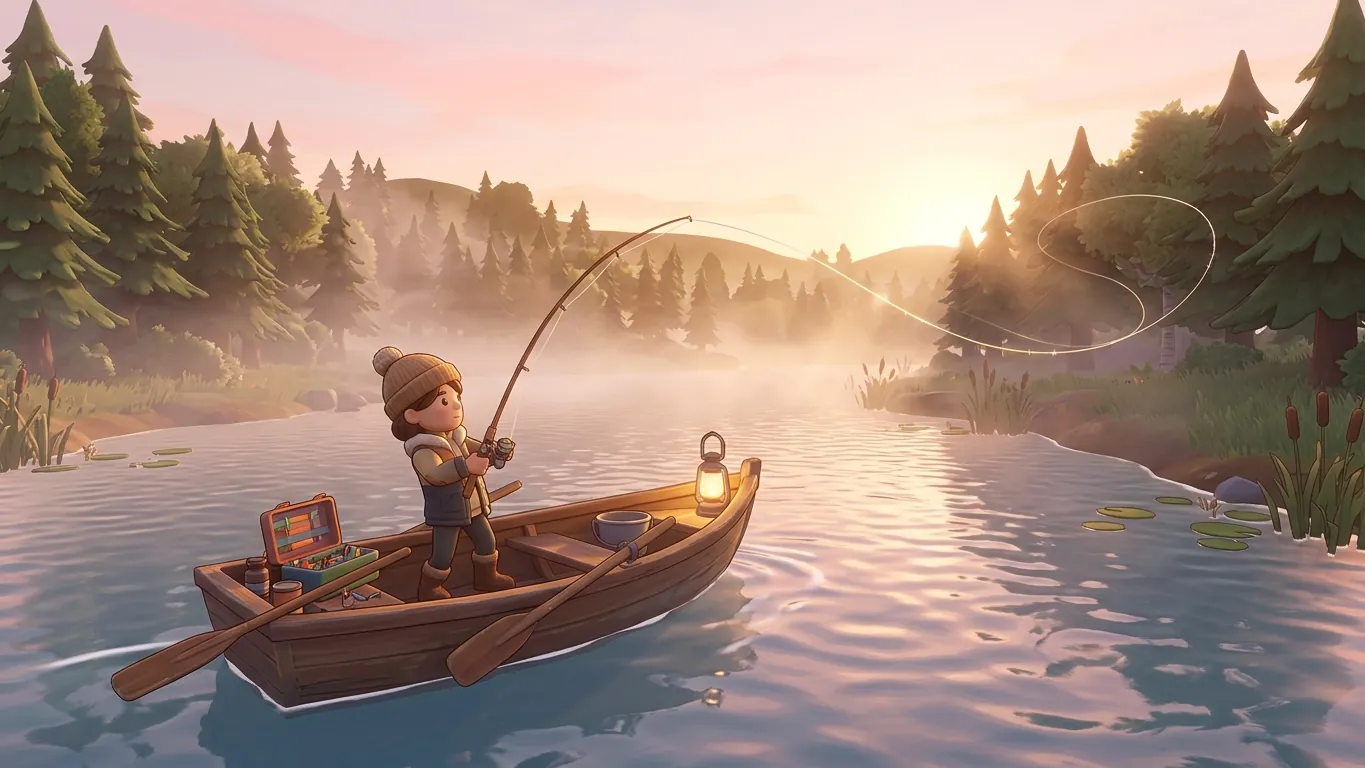
The core loop of a fishing game
Most fishing games follow a similar rhythm. You choose a location, pick your gear, cast, wait for a bite, hook the fish and then bring it in while managing the tension on your line. After the catch, you might log the species, sell it, release it or use the progress to unlock new spots and equipment.
What makes each game different is how deep each step goes. Some keep things relaxed and arcade-like, while others simulate water depth, fish behavior and gear specifications in great detail. Knowing which style you are playing helps you decide how much attention to give to each choice.
Bait versus lures
Live or natural bait, such as worms or small baitfish, tends to attract a wide range of species in many fishing games. It usually works well when you let it sit and wait. Artificial lures, on the other hand, often need you to move them. Spinners, crankbaits, soft plastics and topwater lures each have a style of retrieve that makes them look alive.
If you are just starting out, natural bait is often the easier path because it forgives imperfect technique. Lures become more fun once you understand how retrieve speed, pauses and depth affect which fish show interest. Many games also tell you, through item descriptions or a journal, which species respond to which bait, so it is worth reading those notes.
Casting and reading the water
Where you cast matters as much as what you cast. Fish in games often gather near structure: fallen trees, weed beds, rocky points, drop-offs and the edges of lily pads. Shallow water may be lively in warmer conditions, while deeper spots can hold fish during bright, hot parts of the day.
Take a moment to look at the water before casting. Some games show ripples, jumping fish or bird activity as subtle hints. Others offer a depth map or sonar tool. Even without those aids, varying your casting distance and direction helps you find where the action is.
Line tension and the fight
Once a fish is hooked, the real test begins. Most fishing games represent line tension with a meter, a bending rod or a change in sound. Reel in too hard and the line can break. Reel too gently and the fish may shake free or swim into cover.
The classic approach is to reel when the fish tires or swims toward you and to ease off when it makes a strong run. Many games include a drag setting, which controls how easily line slips off the reel under pressure. A looser drag protects your line from sudden pulls, while a tighter drag gives you more control. Experimenting with drag on smaller fish is a great way to learn before a big one shows up.
Gear upgrades worth thinking about
As you progress, you will likely unlock better rods, reels and lines. Rather than buying the most expensive item available, think about what you want to catch. A light rod and thin line can be wonderful for small, cautious fish but struggle with heavy ones. Heavier setups handle larger species but may scare off shy fish. Matching gear to your target makes each upgrade feel meaningful.
Patience is part of the fun
Some sessions will be full of bites and others will be quiet. That is part of what makes fishing games feel calm and rewarding. Enjoy the scenery, try a new spot or switch bait, and remember that the slow moments make a good catch feel even better.
Related articles
 Tractors, trucks and tools: building a sensible fleet
Practical tips for choosing tractors, trailers, harvesters and trucks in farming games, so your fleet matches your fields and your budget.
Read more
 How car handling works in driving simulation games
Why do some driving games feel heavy and others nimble? Explore weight transfer, tire grip, assists and controller settings in plain language.
Read more
 Crop rotation and soil care in farming games
Many farming games reward healthy soil. Learn how crop rotation, fertilizing, liming and fallow fields can work in game, explained step by step.
Read more