Crop rotation and soil care in farming games
Healthy virtual soil can mean better harvests in many farming sims. This guide explains how rotation and soil treatments usually work and how to build a simple plan you can follow.
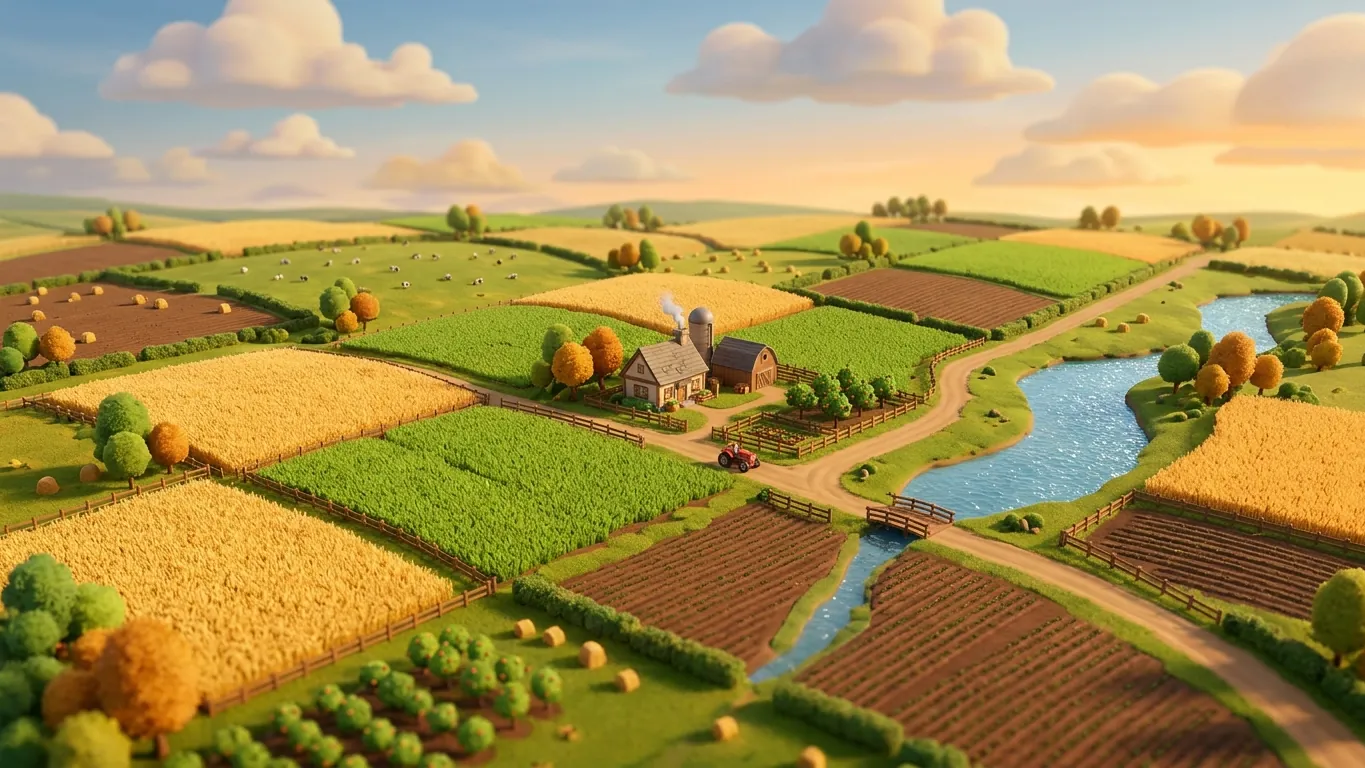
Why soil systems exist in farming games
Early farming games often treated every field the same: plow, plant, harvest, repeat. Many newer titles add soil systems that give your decisions more weight. Your field might track nutrient levels, acidity, weeds, compaction or the last crop grown there. Each factor can nudge your harvest up or down.
These systems are usually optional or adjustable in the settings. If you are just starting, you can switch some off and focus on the basics. When you want more depth, turning them back on gives every season a planning element that many players find rewarding.
Crop rotation in a nutshell
Crop rotation means changing what you grow on a field from one season to the next instead of planting the same crop every time. In games that model it, rotating crops can give a yield bonus, while repeating the same crop may bring a small penalty.
A common in-game pattern alternates a grain with a different crop type, such as a legume, an oil crop or a root crop. Some games also reward leaving a field fallow, or planting a cover crop, for a season. Check your game's help menu or encyclopedia to see which crops it considers good follow-ups. The exact rules differ between titles, so it is worth a quick read before you plan.
Building a simple rotation plan
You do not need a complicated spreadsheet. These steps keep things manageable.
- 01
Group your fields
Split your land into two to four groups of similar size so each group can follow its own place in the cycle.
- 02
Pick a short cycle
Choose two to four crops that your machinery can already handle and that your game rewards in sequence.
- 03
Write it down
Note which crop each field group gets this season and next. A simple note keeps you from forgetting.
- 04
Review after harvest
Check the yields and adjust the plan if one crop is hard to sell or needs equipment you lack.
Fertilizer, lime and other treatments
Beyond rotation, many farming games let you treat the soil directly. Fertilizer typically restores nutrients, and some games distinguish between solid, liquid and organic types like manure or slurry from your animals. Lime is often used to correct soil acidity, and in some titles you only need to apply it every few seasons.
Weed control is another factor. Weeds can lower yield, so games may offer mechanical weeders or sprayers. Rolling or mulching may also give small bonuses. The key is to look at your field information screen, see what it needs and treat only what is lacking rather than applying everything everywhere.
When the extra effort is worth it
Soil care adds tasks, so it is fair to ask whether it pays off in game. On large farms, even modest yield bonuses can add up nicely. On a small starter farm, you might prefer to keep things simple until you have more machinery and helpers.
There is no single right answer. Some players love optimizing every field, while others enjoy a looser, more relaxed approach. Try a light version of rotation and treatment for a season or two, see how it feels and keep the parts you enjoy. Your farm should be fun to run, not a chore.
Related articles
 Weather, time and seasons in fishing games
Learn how fishing games often use weather, time of day and seasons to change where fish feed, and how to adjust your spot, bait and depth.
Read more
 Why driving, fishing and farming games feel so calm
An opinion piece on why simulation games about cars, fishing and farms can feel so soothing, from steady routines to gentle goals and quiet worlds.
Read more
 Planning your farm economy without the stress
A guide to in-game money management in farming sims: tracking costs, timing sales, taking contracts and growing your farm step by step.
Read more