Planning your farm economy without the stress
Running out of in-game money can stall a farm fast. This guide shares simple habits for tracking costs, selling smart and growing your virtual business steadily.
Know where your in-game money goes
Every farming sim has its own economy, but the basic idea is the same: money comes in from selling crops, animal products and completed jobs, and it goes out on seeds, fertilizer, fuel, repairs, land, buildings and machinery. Many games include a finance screen that breaks this down.
Get into the habit of checking it now and then. You might discover that leasing a certain machine costs more than you realized or that one animal type earns far less than another. A clear picture of your spending makes every decision easier.
Timing your sales
In many farming games, crop prices change over time. Some titles have seasonal patterns, others have random fluctuations or occasional high-demand moments at certain selling points. Selling everything the moment you harvest is simple, but it may not get you the best in-game price.
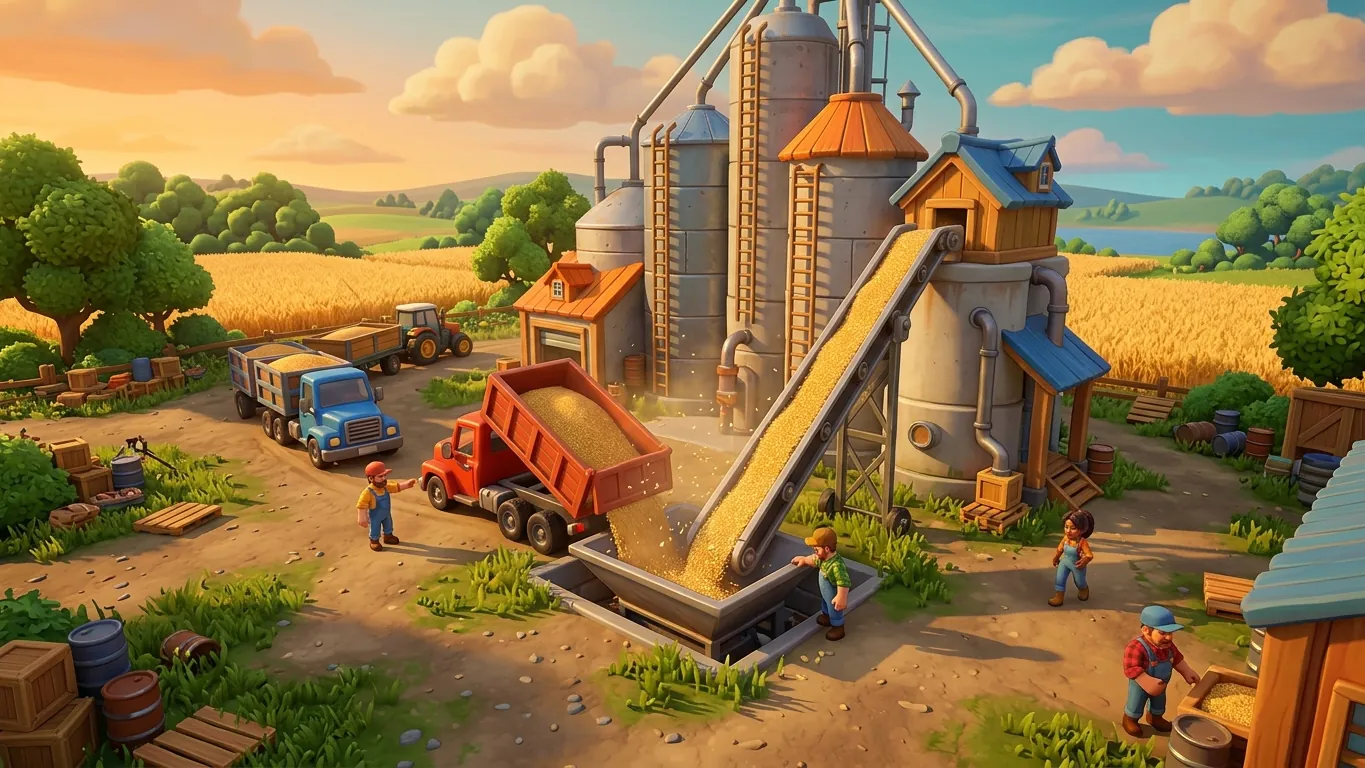
If you have storage, such as silos, sheds or bale stacks, you can hold onto part of your harvest and sell when prices look better. A balanced approach works well for many players: sell some right away to keep money flowing and store the rest to sell later. Also compare different selling points, because prices for the same crop can vary between them.
Contracts and side jobs
Contracts are a fantastic way to earn early in a farming game. Neighbors or other farms ask you to plow, seed, harvest or transport goods, and sometimes they even lend you the equipment. You get paid without needing to own the land or the machines.
Contracts also let you try different tasks and equipment before you invest. If you enjoy a job type, you can build your farm around it later. Just be careful not to take on too many at once, because unfinished contracts can lead to penalties in some games.
A monthly check-in routine
Pause once every in-game month or season and run through these quick steps.
- 01
Review the finance screen
Look at income and expenses and note anything that seems unusually high.
- 02
Check storage and prices
See what you have in stock and whether any selling point offers a good price right now.
- 03
Look at your machines
Sell or return equipment you have not used recently, and schedule needed repairs.
- 04
Set the next goal
Pick one clear target, such as a new field or a better harvester, and plan toward it.
In-game loans: handle with care
Many farming sims offer loans that let you buy land or machinery sooner. They can speed things up, but interest payments eat into your profits every period. A good rule is to borrow for things that will clearly earn back their cost, such as a field you can farm immediately, and avoid borrowing for items that would simply be nice to have.
Paying loans down when you have spare money keeps your farm flexible and gives you breathing room if a harvest turns out smaller than expected.
Diversify gradually
Relying on a single crop can leave you exposed if its price drops. Adding a second crop, a few animals or a production building can smooth out your income over the year. Just grow these branches one at a time so you can learn each system without spreading yourself thin. A steady, varied farm is often both more resilient and more fun to manage.
Related articles
 Your first season in a farming sim, without the overwhelm
Starting a farming simulation game? Learn how to plan your first season, pick early crops, manage machinery and avoid common beginner mistakes.
Read more
 Fishing game basics: bait, lures and line tension
A friendly explainer on how fishing video games usually work, from choosing bait and lures to managing line tension and landing your first catch.
Read more